Entering China in 2026: What Foreign Companies Need to Know About Setup, Compliance, and Market Access
China’s 2026 inbound rules look nothing like 2019’s. Cross-border data fines now start at RMB 1 million per file, negative-list sectors require “pre-establishment” national-security clearance, and free-trade-zone (FTZ) governments compete on who can rubber-stamp a Wholly Owned Foreign Enterprise (WOFE) fastest—48 hours in Zhuhai Hengqin, 72 in Shanghai Lingang. Below is a field-tested checklist used by electronics, SaaS, and CPG firms that opened in 2025 and are now revenue-positive. Copy-paste what fits your sector; ignore the rest at your own cost.
1. Pick the Right Legal Vehicle—Before You Sign a Lease
1.1 WOFE vs. JV vs. Representative Office (RO)
- WOFE: Only structure that allows invoicing in RMB, hiring >50 staff, and repatriating profit dividends without a Chinese equity partner. Minimum capital rule was nominally deleted in 2024, but banks still insist on injecting at least 30 % of your 3-year opex forecast to open a basic RMB account.
- Joint Venture: Mandatory for VPN services, certain medical devices, and 2026’s new “generative-AI training data” sub-sector. Draft the deadlock-breaker clause now; Chinese courts will not enforce a U.S.-style arbitration award that forces a share transfer.
- RO: De-facto banned for anything that touches revenue. New guideline from SAFE (State Administration of Foreign Exchange) says ROs can only remit foreign currency if the underlying contract is signed by the parent, not the RO. Translation: you pay 25 % corporate income tax on “deemed profits” but cannot issue local invoices. Skip.
1.2 Shelf Companies vs. Greenfield
Pre-registered “shelf” WOFEs exist in Shenzhen Qianhai and Hainan Free-Trade Port. They save 3-4 weeks, but the registered capital is usually RMB 10 million; if your business plan shows RMB 1 million revenue, you will trigger tax bureau scrutiny on “capital abuse.” Greenfield is slower (6–8 weeks) but lets you size capital to real cash needs.
1.3 City Scorecard 2026
Hangzhou (e-commerce live-streaming), Chengdu (gaming), and Suzhou (industrial IoT) offer 30 % rent rebates and up to RMB 3 million cloud-credit vouchers. Shanghai and Beijing still win for global talent, but social-insurance base rose 12 % YoY—budget an extra USD 8 k per expat manager.
2. Data & Cyber Compliance: The New First Mile, Not the Last
2.1 Three Laws You Must Calendar
- PIPL (Personal Information Protection Law): If you touch >1 million Chinese users’ data, you need a China-only server and a data localization audit before go-live.
- DSL (Data Security Law): “Important data” (even encrypted) must be classified and filed with provincial Cyber-Space Administration (CAC). Miss the 15-day post-collection deadline and the fine is RMB 100 k–1 m per data set.
- Cybersecurity Review Measures: 2026 update adds “influence on national opinion” as a trigger. If your app can push content to >500 k followers, assume you are in scope.
2.2 Practical Filing Sequence
- Server-side: Choose either Alibaba Cloud “financial zone” or Tencent Cloud “compliance zone”—both give pre-filled CAC templates.
- Legal side: Appoint a China-based Data Protection Officer (DPO) with a Chinese mobile number; the CAC online portal will not accept foreign SMS verification.
- Audit side: Use a Shanghai or Beijing lab with CNAS accreditation; otherwise your report is rejected 60 % of the time (2025 SAMR statistics).
2.3 Cross-Border Data Transfer Routes
- Standard Contract (SC): Fastest—30 working-day CAC silence equals approval. Cap is 10 k sensitive or 1 million non-sensitive records per year. Most SaaS firms qualify.
- Security Certification: Required for industrial IoT data >10 GB per month. Needs on-site penetration test; budget 6 weeks.
- CAC Export Assessment: Mandatory for human-genetic, large-scale geo-mapping, or state-owned enterprise procurement data. Timeline: 6–9 months. If you are unsure, run a data-mapping workshop in month −3 of launch planning.
3. Import vs. Domestic-Made: The 13 % VAT Fork in the Road
3.1 Import Tunnel
Tariffs average 7 %, but 2026’s provisional rates cut semiconductor parts to 0 %. The real pain is customs valuation: China uses “first-sale-for-export” only if you can produce the original purchase order from the overseas factory. Otherwise, Customs uses the higher “third-party reseller” price, pushing taxable base up 15–30 %. Build transfer-pricing documentation before the first shipment.
3.2 Domestic-Manufacture Route
If >30 % value-add happens in an FTT (Free-Trade Zone) you can label goods “China-origin,” dodging retaliatory tariffs when re-exporting to the EU or India. Watch the “sliced manufacturing” trap: simply packaging imported chips in Suzhou does not confer origin; die-attach and wire-bonding do. Get a pre-ruling from GACC (General Administration of Customs of China) so your future buyer can claim FTA preferences.
3.3 Bonded vs. Non-Bonded Warehousing
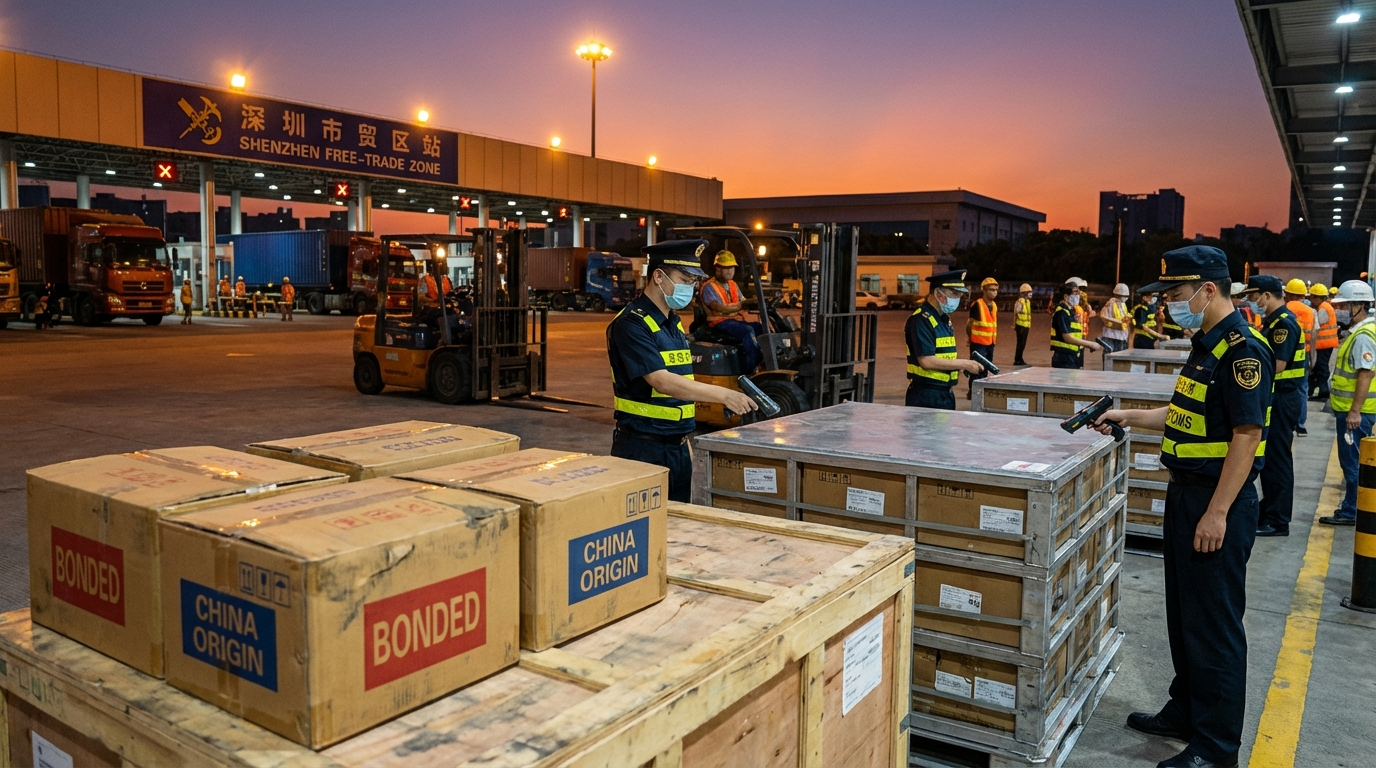
Bonded warehouses let you defer VAT until final clearance—cash-flow positive when VAT is 13 %. Downside: inventory must be tracked in the China E-Port system; every stock adjustment needs Customs e-signature. Many foreign firms outsource to a 3PL like SF DHL who carry the liability.
4. Market Access Licenses: The Sector-Specific Sprint
4.1 Medical Devices
Class II devices (thermometers, ultrasound) moved from province-level to National Medical Products Administration (NMPA) in 2025. Technical review is now 60 days instead of 90, but you must submit clinical evaluation reports generated inside China or in a mutual-recognition country (Germany, Japan). Factor in RMB 300 k for local testing.
4.2 Food & Supplements
Health-food “Blue-Cap” registration still needs animal trials for new ingredients. However, 2026 cross-border e-commerce (CBEC) pilot adds 12 more cities—your overseas label is acceptable if turnover <RMB 5 million per SKU per year. Use CBEC to validate demand; switch to general trade once volume >5 k units per month to protect margin from 9 % CBEC platform fee.
4.3 Automotive (Software-defined Vehicles)
If your product is L3+ autonomous firmware, you must pass the MIIT “security test” that includes source-code escrow. NDRC caps foreign equity at 50 % for L4 passenger vehicles. Many Tier-1 suppliers set up a second WOFE that only sells ADAS software, avoiding the equity cap.
5. Capital, Banking, and Profit Repatriation
5.1 SAFE Registration Refresh
In 2026, banks run quarterly “rationality checks” on outbound payments. Keep a rolling 12-month cash-flow forecast in Chinese, signed by your local CFO. Transfers >USD 5 million need a tax-bureau “no objection” letter—obtained in 3 days if your stamp-duty filings are current.
5.2 Dividend vs. Service-Fee Route
Dividends incur 10 % withholding (reduced by treaty) but require annual audit and 25 % CIT clearance. Service fees (royalty, tech support) allow 6 % VAT plus withholding but skip CIT if under 19 % deemed-profit rate. Model both; for IP-heavy firms, mixed remittance saves 4–6 % net tax.
5.3 RMB Internationalization Perks
If your home country has a Participating Bank of CIPS (e.g., Deutsche Bank, Standard Chartered), you can remit RMB back to parent and convert later, hedging FX outside China’s onshore spread. Activate the CIPS account in month −1; onboarding takes 4 weeks.
6. Talent & Payroll: 2026 Cost Reality Check
6.1 Hiring Foreigners
Work (Z) visas now demand a “no criminal record” authenticated within 6 months, not 12. Plan apostille early. Social-insurance participation is compulsory in Shanghai and Shenzhen; you cannot “buy out” with private insurance anymore. Budget 38 % employer cost on top of gross salary.
6.2 Local Talent Race
Fresh-graduate salaries rose 18 % in AI majors; counter with stock-appreciation rights (SARs) settled in parent-co shares—legal if structured through an offshore trust. Must register the plan with SAFE under Circular 7 within 30 days of grant, else employees cannot remit proceeds.
6.3 Remote Work Compliance
Post-pandemic, many firms keep developers in Chengdu while legal entity sits in Shanghai. If an employee works >183 days in a city where you have no entity, local tax bureau can deem a “permanent establishment.” Use a Professional Employer Organization (PEO) or open a cost-plus branch to absorb the risk.
Practical Conclusion & Next Steps
China in 2026 rewards speed, but only if compliance keeps pace with registration. Treat the six blocks above as parallel tracks, not sequential steps: start data-mapping while you shortlist cities; draft JV clauses while you lab-test SKUs; open the CIPS account the same week you inject capital. Firms that batch these workflows average 4.5 months from name pre-approval to first invoice; those that treat compliance as an afterthought add 8–10 months and burn runway.
Need templates, vetted vendors, or sector-specific license roadmaps? BRCCC maintains updated playbooks, on-call compliance counsel, and city-level subsidy trackers—free for members. Start at brccc.org/services or book a 30-minute diagnostic with one of our China-entry engineers at brccc.org/experts.